
The Price Signal
How prices communicate dispersed knowledge no central planner can possess — Hayek's deepest contribution.
Friedrich Hayek
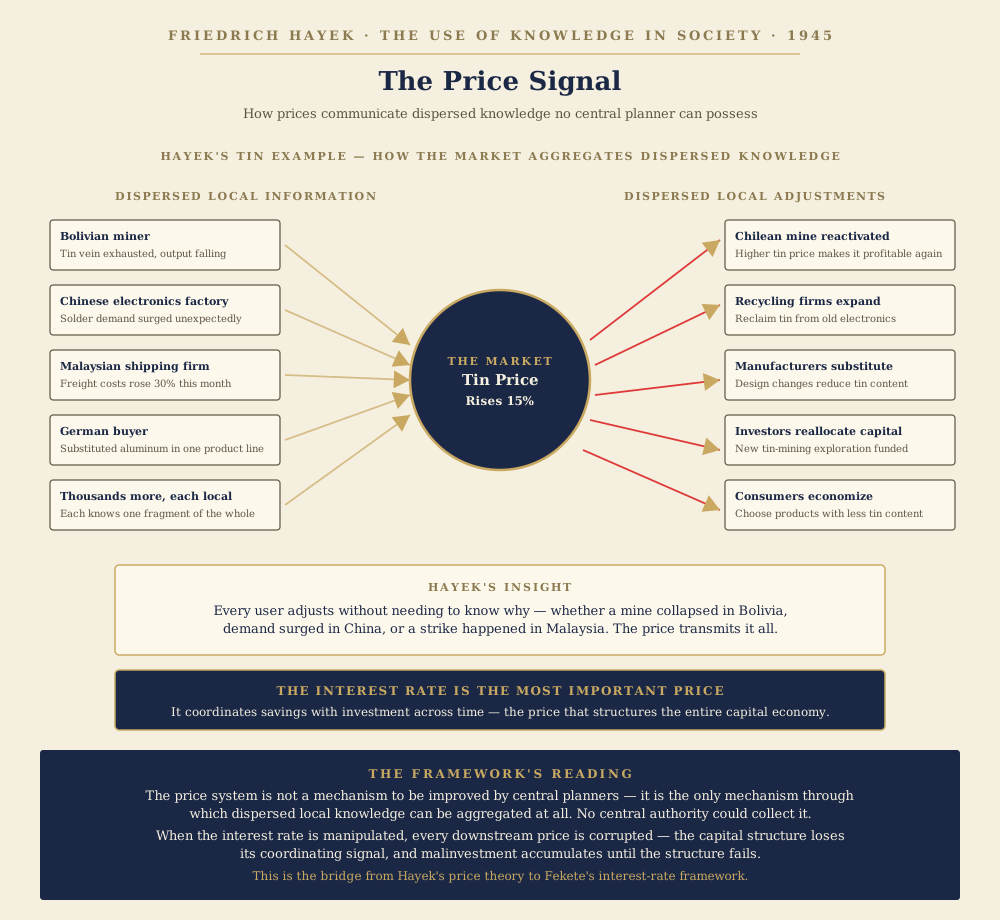
In his 1945 essay “The Use of Knowledge in Society,” Hayek articulated the most powerful argument for free markets ever made: the price system is aninformation processing mechanism that aggregates dispersed, local knowledge that no central authority could ever collect.
The Knowledge Problem
No planner can know the preferences, capabilities, and local conditions of millions of economic actors. Prices encode this knowledge automatically. When the price of tin rises, every user of tin adjusts without needing to know why — whether a mine collapsed in Bolivia or demand surged in China.
Interest Rates as Price Signals
The interest rate is the most important price in the economy — it coordinates savings with investment across time. When central banks manipulate this price, they corrupt the signal that the entire capital structure depends on. This is the link between Hayek's price theory and Fekete's interest rate framework.