
The Dispatch
Current macro events analyzed through the New Austrian framework. Published on the site, distributed via newsletter.
Subscribe to The Dispatch
Weekly analysis delivered to your inbox. Free tier available.
Prefer to listen? Every issue is narrated — add the audio edition to any podcast app.
Or view the raw RSS.
Nothing Had to Be Repealed
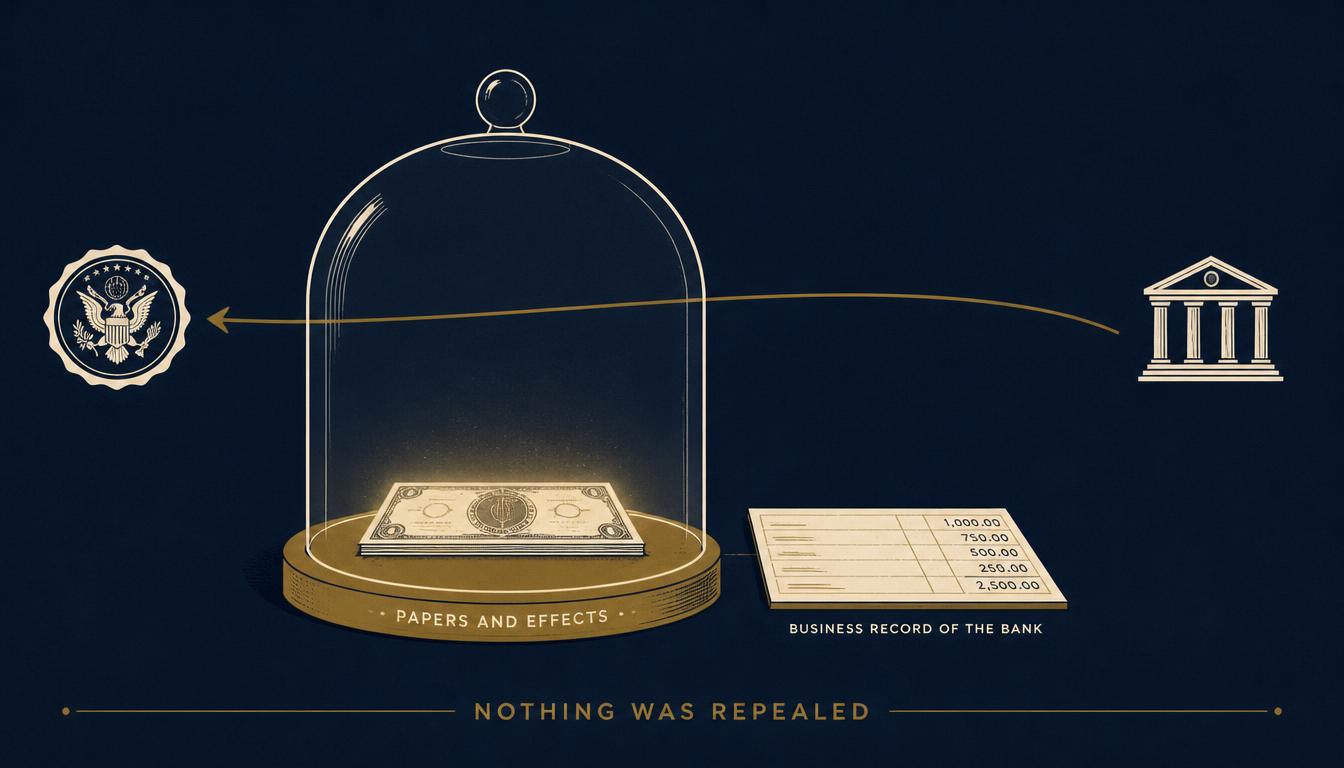
On April 21, 1976 the Supreme Court held seven to two that a bank depositor has no Fourth Amendment interest in his own financial records. The reasoning was that checks, deposit slips and account statements are the business records of the bank rather than the depositor's private papers, and that information conveyed to a third party loses constitutional protection even when revealed on the assumption it would be used only for a limited purpose. Justice Brennan dissented on the ground that it is impossible to participate in the economic life of contemporary society without maintaining a bank account, and that a conveyance one cannot avoid is not voluntary. He lost. United States v. Miller became the third-party doctrine, extended to telephone records three years later and qualified only narrowly in Carpenter. Forum #59 argues that Miller is the unexamined precondition for the architecture this catalog has documented across its work on programmable money: if intermediated financial records carry no constitutional protection, and a cashless system makes every transaction intermediated, then no financial act is constitutionally private — and no one had to repeal anything to reach that result.
The Last Unencumbered Asset
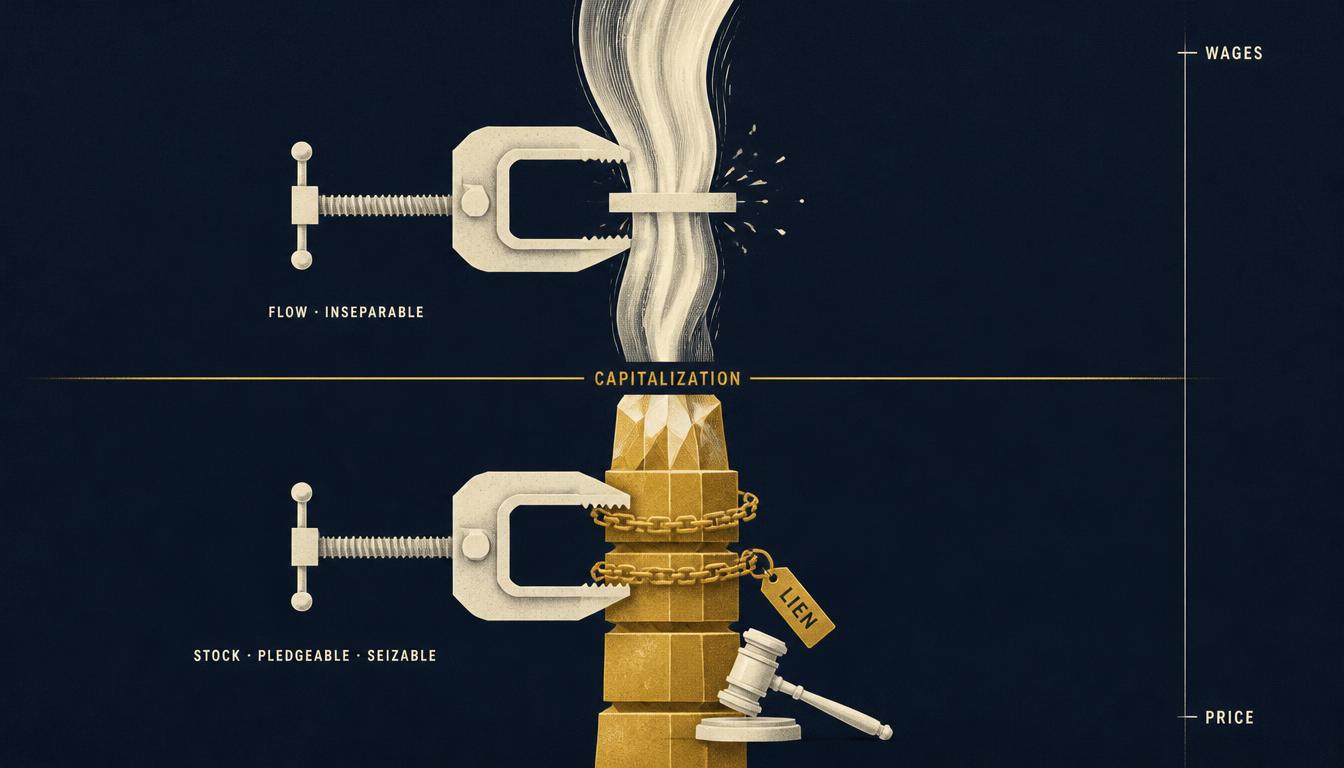
In 2002 Eric Weinstein published a proposal in the International Labour Review recognizing native workers as the holders of a right of preferential access to their own labor market, and requiring employers who wish to hire outside it to license that right for a fair price rather than receive it by administrative grant. Workers keep working at a lower wage and receive licensing income on top; on his account their blended income rises. He has since extended it to artificial intelligence, treating AI as one more supplier of labor that workers license, and offers it as the free-market alternative to universal basic income. The proposal is genuinely Coasean and more rigorous than most of what occupies that space. Forum #56 takes it seriously on those terms and then runs the framework's own test against it. Fekete's question — does this transaction actually exchange income for wealth? — returns no: the worker sells nothing, and human capital stays where it was. What the proposal does is split the wage in two. The return to skill remains human capital: unconfiscatable, not fixed in nominal terms, portable. The premium for market access becomes a licensing claim, paid through government and worker representatives, bound to one country and one sector, with none of those properties. In the immigration case the claim is a supplement. In the AI case it is the share that grows, and at full displacement it is the whole.
One Window
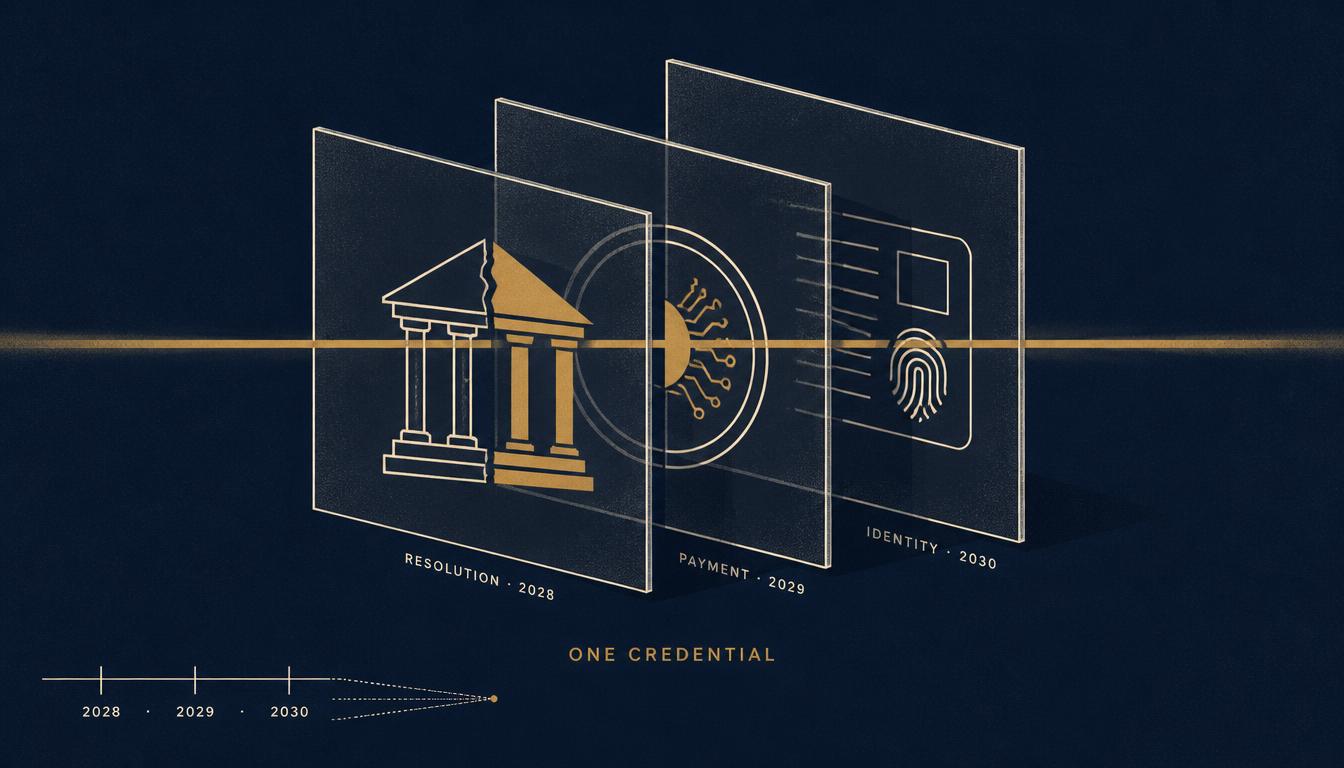
Three pieces of infrastructure are being built on published schedules that converge between 2028 and 2030. An identity layer, under Sustainable Development Goal Target 16.9 and — far sooner — Article 5a(1) of Regulation (EU) 2024/1183, which obliges every member state to provide a European Digital Identity Wallet by December 24, 2026, with mandatory private-sector acceptance twelve months later. A payment layer, in a digital euro whose twelve-month operational pilot begins in the second half of 2027 and whose potential first issuance is targeted for 2029. And a resolution layer, in the reformed Crisis Management and Deposit Insurance framework, applying from May 2028, under which deposits above the guarantee threshold remain bail-inable by statutory definition. Each was commissioned separately, by a different institution, for reasons that are individually defensible, and one of them addresses a genuine harm affecting roughly 850 million people. Forum #55 does not claim they were coordinated and finds no evidence that they were. Its claim is narrower and harder to dismiss: together they constitute an architecture in which participation, expenditure, and the adjustment of a depositor's claim all resolve to a single credential, and no document describing any one layer describes that result.
The Friction Nobody Designed
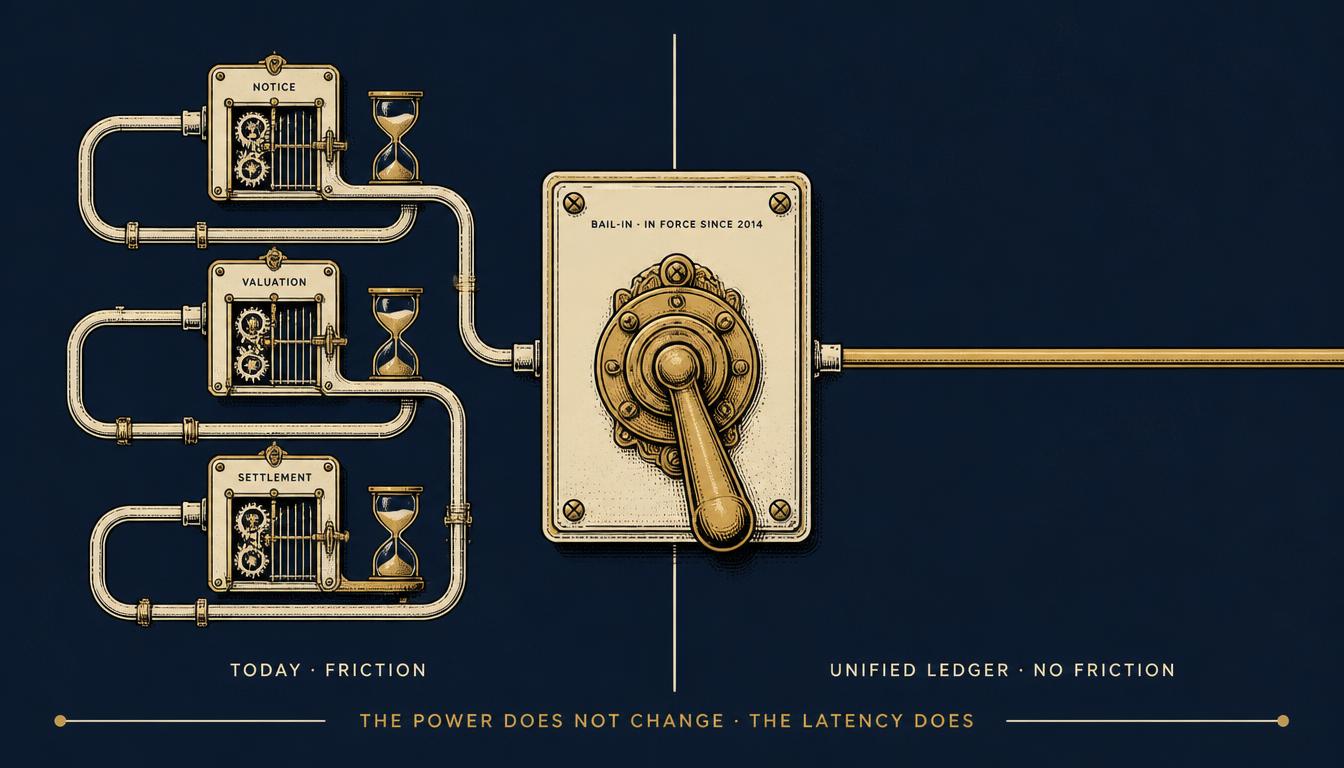
The recurring claim is that the next liquidity event will be used to impose central bank digital currency and to seize bank deposits. Forum #54 examines the documentary record and finds the claim mistaken in its structure while resting on facts that are almost entirely accurate. Bail-in has been European Union law for a decade: bail-in of at least eight percent of total liabilities and own funds is a precondition for accessing the Single Resolution Fund, and the Single Resolution Board defines bail-inable deposits as all deposits other than covered deposits below one hundred thousand euros. Nothing needs to be imposed, because the authority already exists. What a BIS unified ledger would change is not the authority but the latency — the interval between a resolution decision and its execution. That interval was designed by no one, protects no one deliberately, and is exactly the kind of thing an efficiency improvement removes without discussion. This issue covers the interval since #016 and the seven Watching the Cracks essays published across it.

Title Without Metal
On June 17, 2025, Robert Leroy Higgins was sentenced to sixty-five years in federal prison — the statutory maximum — for stealing at least seventy-six million dollars in customer metal from First State Depository in Wilmington, Delaware. Roughly 2,100 customers held metal there in individually labeled boxes — the segregated allocated arrangement Forum #37 recommended. When the court-appointed receiver arrived with federal marshals and auditors, the boxes were found to contain IOU slips. Perfect legal title to bars that did not exist. Forum #47 develops the analytical distinction Forum #37's Custody Depth score missed — allocated storage protects against custodian insolvency and provides zero protection against custodian fraud — and replaces the score with a corrected framework in which verification is a precondition rather than a secondary consideration. This week the framework catches itself again, and Warsh's Capitol Hill testimony puts the substitute-layer's own ceiling into institutional policy language.

Being Early Is Being Wrong
The framework's substrate-fragility diagnosis has been directionally true since 1971. A saver who acted on it by holding physical gold from 1980 to 2000 would have watched their hedge's real value fall by roughly three-quarters. Being right and being punished are not incompatible under substitute-layer conditions. This week the framework launched a new series — Stress-Testing the Framework — to subject its own conclusions to the same rigor it has applied to UBI, CBDC, and capital destruction. The three installments arrive with the Warsh FOMC's first unified three-way dissent since 2016, the yield curve repricing Fed credibility rather than policy, and the launch of a new podcast whose first episode scores a framework call as partially wrong. The catalog is applying its own standards to itself.
The Saleability Premium
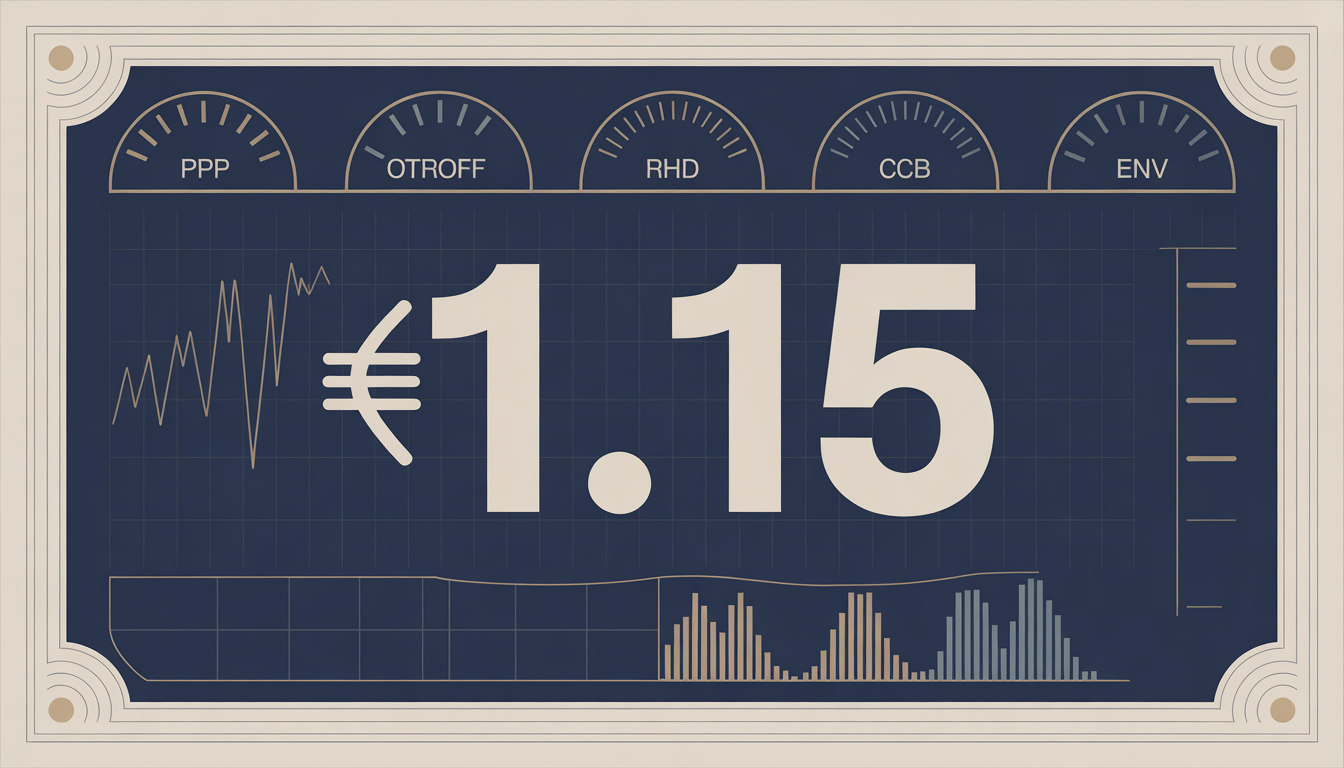
The U.S. Treasury market is the deepest financial market on earth. Two nearly-identical 10-Year Treasury notes — one auctioned this quarter, one auctioned last quarter — trade at persistently different yields. That gap prices saleability. Nothing else. Same credit. Same duration. Same tax treatment. Same clearing infrastructure. Only the newer issue is the on-the-run benchmark; the older is off-the-run. This week the framework's diagnostic apparatus made that reading operational as OTROFF — the sovereign-substrate saleability premium, live at /toolkit/otroff-spread. And the ledger is dense: the ICBC retail paper-gold deadline passed Friday; a fourth 2026 bank failure landed July 17; Hormuz is at near-standstill; and Warsh's second FOMC arrives Wednesday.

The Distribution Question
In April, Musk endorsed 'universal high income' at the Saudi-US Investment Forum. In July, Altman went on Theo Von's podcast and pitched 'universal extreme wealth' via 1 billion AI-generated tokens per person globally. In October 2025, the Guaranteed Income Pilot Program Act appropriated $495 million for a three-year federal pilot. 72 U.S. cities and states have run guaranteed income pilots across 26 states. The rhetoric of AI-driven mass displacement is everywhere. The empirical picture is materially more modest: Goldman Sachs estimates 2.5–6.7% displacement risk; the Fed projects 4.4% unemployment by end 2026 with no AI-driven spike; Harvard Business Review found 77% of AI-attributed layoffs were anticipatory. Meanwhile the Hormuz interim deal has operationally unraveled. The framework's new three-part series — The Distribution Question — reads what is actually being proposed, by whom, on what empirical basis, and what the gap between rhetoric and reality reveals about the institutions the proposals serve.

The Saver's Problem
The saver in 2026 opens their 401(k) statement against a week of mixed signals. The June CPI print came in below the framework's predicted band — headline +3.5% versus a 4.5–5.5% Q3 forecast. Meanwhile the Hormuz interim deal has been operationally revoked less than a month after it was signed, with three commercial vessels attacked on July 7 and the U.S. Treasury pulling General License X. And Kentland Federal Savings and Loan — at $3.7 million the smallest standalone bank in America — became the third U.S. bank failure of 2026 on July 10. Everyone alive has spent their entire economic life operating within the post-1971 substitute-layer environment. Forum #37 turns the framework's apparatus toward the individual saver's decision under those conditions.

Zero Policies
On March 6, the U.S. Development Finance Corporation announced a $20 billion Maritime Reinsurance Facility to backstop war-risk coverage for Hormuz transits. On April 3, the facility was doubled to $40 billion with six additional U.S. insurers alongside lead underwriter Chubb. By mid-May, industry reports confirmed the facility had written zero policies. Not one dollar of coverage placed. Not one vessel transited under its protection. Combined with the failed $500 million Spirit Airlines bailout in late April, the DFC facility constitutes the second substitute-layer failure at government scale in 2026. Magnitudes differ by a factor of eighty. The mechanism is identical.

The Bill Market That Wasn't
On June 19, the United States and Iran signed an interim peace deal. On June 22, Iran declared the Strait of Hormuz closed again. On June 25, a cargo ship was attacked off the Omani coast. On June 24, only 62 commercial vessels crossed the strait — 53% of pre-war daily traffic. The political resolution arrived; the disruption persists. The framework's catalog this week added Forum #33 — the foundational defense of the Golden Triangle, the pre-1914 architecture of gold coin + gold bills + gold bonds that historically handled exactly this kind of trade shock through self-liquidating bill market clearing rather than through reserve releases and insurance-market re-establishment. The Hormuz week is the real-time illustration of what's missing.

130 Words
On June 17, Kevin Warsh held his first FOMC meeting and produced a 130-word statement — a 53% cut from Powell's April statement on a like-for-like policy-text basis, structurally comparable to Greenspan's 99-word baseline at the start of the post-meeting regime in February 1994. The Committee held 12-0 at 3.50-3.75%. Seventeen of eighteen participants judged inflation risks tilted to the upside. The median 2026 dot flipped from an implied cut to an implied hike. Warsh declined to submit his own dot — unprecedented for a sitting Chair. And he announced five task forces, including one charged with reviewing the Fed's inflation framework. The framework's Forum #20 critique has been operationally adopted at the institutional level.

The May Print Lands
At 8:30 a.m. Eastern on Wednesday, June 10, the BLS released the May 2026 CPI. Headline came in at 4.2% year-over-year — the third consecutive monthly acceleration and the highest reading since April 2023. Core came in at 2.9%. Gasoline rose 40.5% YoY (vs 28.4% the prior month). Fuel oil rose 58.9%. Food jumped from 2.3% to 3.1% in a single month. Issue #006 made specific time-bounded predictions about how the Hormuz shock would propagate to U.S. consumer prices on calendar-time mechanics. The May print is the first major data point that directly tests those predictions — and the framework's record is now in the ledger.

Extend, Pretend, Foreclose
Through the first five months of 2026, a Chicago office building changed hands at a 94% loss from its decade-prior value, a Denver complex at 97%, eight floors of a Mid-Market San Francisco tower at 92%, the former GSA building in Washington DC at 76%. Meanwhile Worldwide Plaza ($940M loan), One New York Plaza ($835M, extended to 2028), and 620 Eighth Avenue ($515M, modified five times since 2020) sit in special servicing rather than enter the same fire-sale market. CMBS office delinquency hit an all-time high in January, then 'dropped' 114 bps in February because lenders modified loans rather than recognize losses. The framework's CRE prediction from Issue #003 is operationally here — and the regional banks holding 70% of CRE loans are the substrate that will absorb what the special servicers cannot defer.

The Lag
Supply shocks propagate to consumer prices on calendar time, not news-cycle time. The Strait of Hormuz closure that began on February 28 is now four months into a propagation sequence whose academic-literature pass-through estimates point to peak American household impact in Q1–Q2 2027 — twelve to fifteen months after the shock began, and substantially after any plausible geopolitical resolution. The strategic reserves are not absorbing the disruption; they are deferring it. The framework reads the lag as the structural mechanism.

Paper and Physical
On January 30, 2026, silver fell 35.7% from its January 29 spot peak of $121.67 to the $78.29 COMEX February settlement. Gold dropped about 13% over the same window. The COMEX paper price collapsed and the physical markets did not follow it down on the day — London converged within two sessions, but dealer premiums in Tokyo and Dubai ran 40–80% over COMEX. The framework reads this as the cleanest single operational demonstration of substrate-layer fragility the catalog has documented — and the moment paper-physical decoupling stopped being theoretical.
The Metro Saleability Map
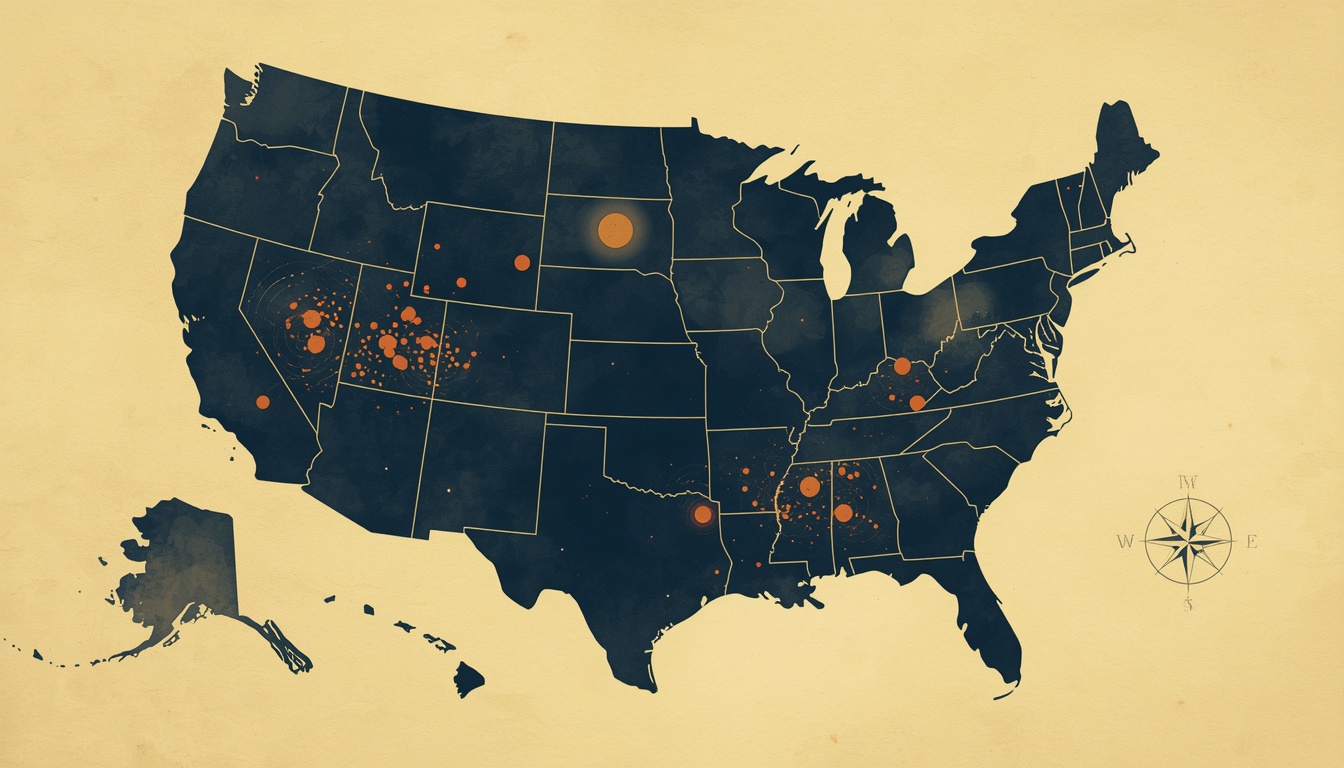
National housing statistics obscure the only variable that now matters. Through Q1 2026, 89 of the 300 largest U.S. metros are in outright year-over-year price decline while Hartford is up 22.5% from its 2022 peak and Toledo is projected at +13%. Lakeland, Florida runs the highest foreclosure rate in the country; Columbus, Ohio runs the cleanest framework-validated case for buying. The geographic split is real, sharp, and worsening — and the framework's housing prediction from Forum #7 is being validated against forty metros, four indicators, and one US map.

Two Failures a Year
The FDIC has reported two bank failures so far in 2026. Two in 2025. Two in 2024. The headlines call it stabilization. The framework reads the same data and concludes the opposite: every zero-failure or near-zero-failure period in the past quarter-century has preceded a systemic event, and every underlying stress indicator the failure count is supposed to summarize is currently flashing in a way the failure count itself is not.

Code Was Never Law
In April 2026, Jameson Lopp and five co-authors proposed a soft fork that would sunset legacy signature types covering the more than 34% of all bitcoin whose public keys are already exposed on-chain. On May 1, Paradigm countered with a privacy-preserving alternative. Maximalists are calling it confiscation. The framework calls it the predicted manifestation of the Cryptographic Marketability Premium — and the first hard test of 'your keys, your coins.'

Why Gold Didn't Spike
Gold sat at $5,005 — below where it started the war — while the Strait of Hormuz was closed. Central banks turned net sellers in March. The mainstream couldn't explain it. Antal Fekete predicted it.