The Business Cycle
Credit expansion, malinvestment, and liquidation — why the bust is the cure, not the disease.
Mises / Hayek
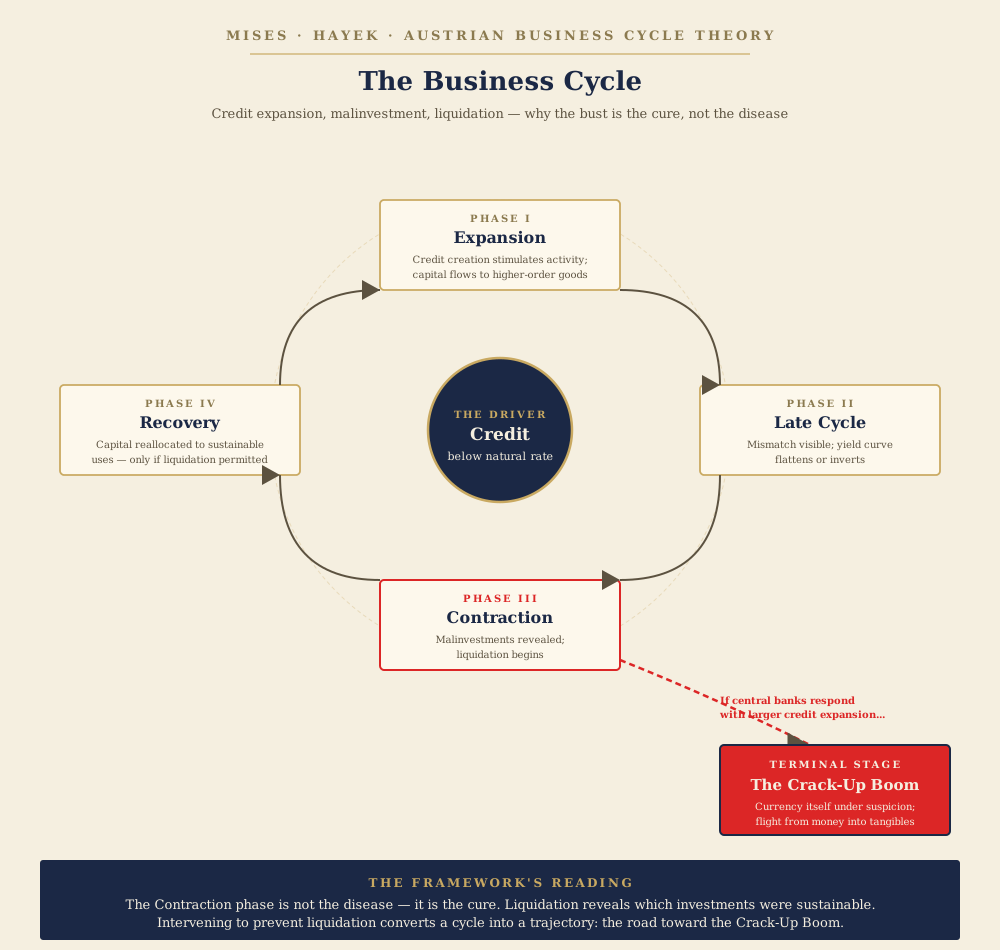
The Austrian Business Cycle Theory (ABCT) explains recessions as the inevitable consequence of artificially cheap credit. When central banks push interest rates below their natural level, entrepreneurs undertake investments that appear profitable but are not sustainable — malinvestments.
The Phases
Expansion — credit creation stimulates activity. Capital flows into higher-order goods (tech, infrastructure, speculative assets).
Late Cycle — the mismatch between real savings and credit-funded investment becomes visible. Yields flatten or invert.
Contraction — malinvestments are revealed. Liquidation begins.
Recovery — capital is reallocated to sustainable uses. Only possible if liquidation is allowed to proceed.
The Crack-Up Boom
Mises warned of a final stage: if central banks respond to each contraction with ever-larger credit expansion, the currency itself comes under suspicion. People flee from money into any tangible asset. This is the crack-up boom — the terminal phase.