Marginal Utility
The subjective value revolution that started it all — value is determined at the margin.
Carl Menger
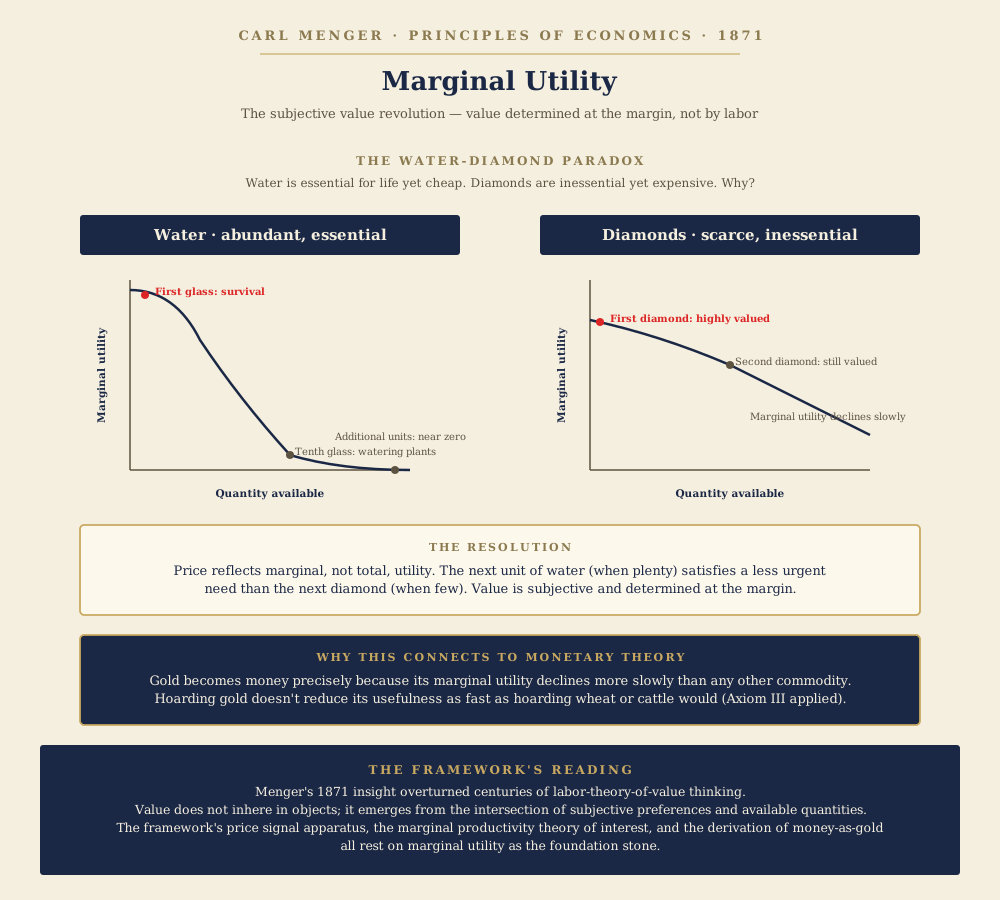
Menger's Principles of Economics (1871) introduced the concept that revolutionized economic thought: the value of a good is not determined by the labor required to produce it, but by the importance of the least important need it satisfies — its marginal utility.
The Water-Diamond Paradox Resolved
Water is essential for life but cheap. Diamonds are inessential but expensive. Marginal utility resolves this: the next unit of water (when you have plenty) satisfies a less urgent need than the next unit of diamonds (when you have few). Price reflects marginal, not total, utility.
Connection to Monetary Theory
The Axiom 3 insight depends on marginal utility: gold becomes money precisely because its marginal utility declines more slowly than that of any other commodity. Hoarding gold doesn't reduce its usefulness to the holder as fast as hoarding wheat or cattle would.