Origin and Nature of Money
How money emerges spontaneously from barter via the saleability gradient — Menger's foundational insight.
Carl Menger
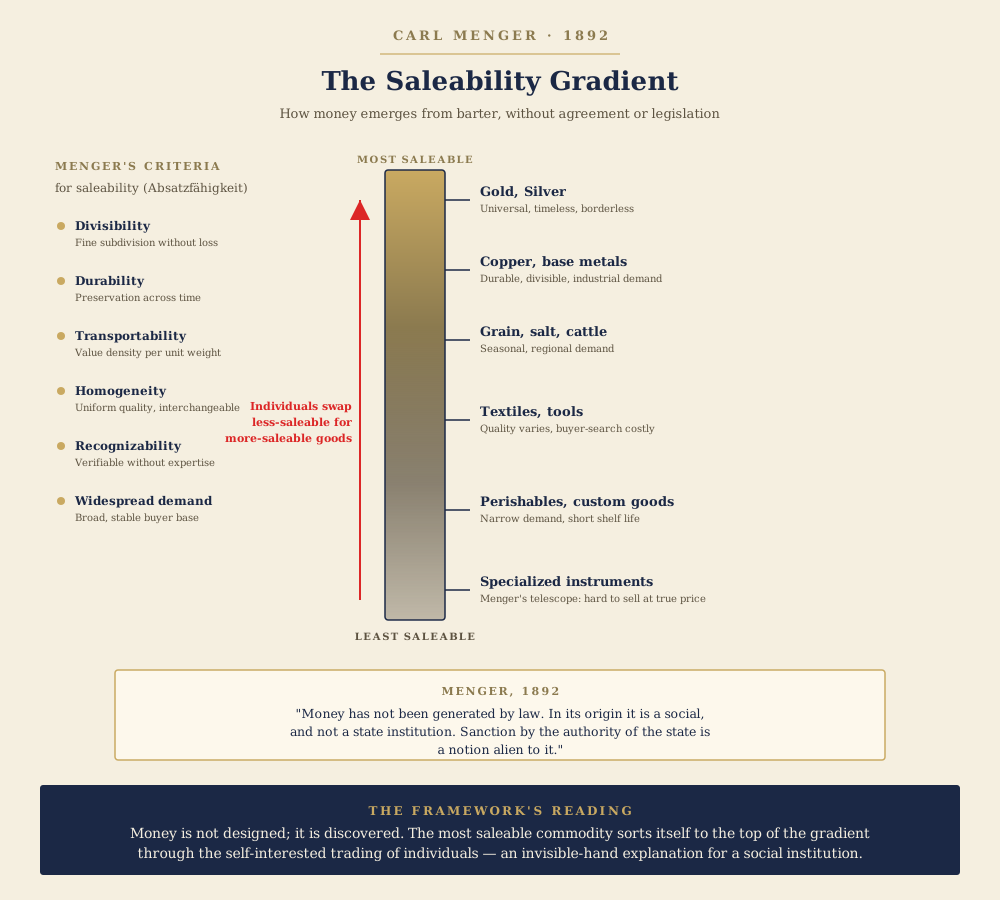
In his 1892 essay On the Origins of Money, Menger solved the problem that had stumped economists for centuries: how does money arise? Not by government decree. Not by social contract. By the self-interest of individual traders discovering that some commodities are more saleable than others.
Saleability
A commodity's saleability is its capacity to be sold at any time at a price corresponding to its economic value. Cattle are less saleable than silver; silver less saleable than gold. The most saleable commodity naturally gravitates toward becoming the universal medium of exchange — money.
Why This Matters Now
Menger's framework explains not just how gold became money, but why fiat currency is structurally fragile. A commodity becomes money because of its properties, not because of legislation. When legislation forces a different commodity (paper) into the monetary role, the underlying economic logic doesn't change — it just goes underground.