Part Two: Action Within the Framework of Society
Chapter IX — The Role of Ideas
Ludwig von Mises · Human Action (1949) · A New Austrian Reading
"Ideas, and ideas alone, determine the course of human affairs." — Ludwig von Mises, Human Action, Ch. IX (paraphrased for length)
Chapter IX — The Role of Ideas
What Mises argues
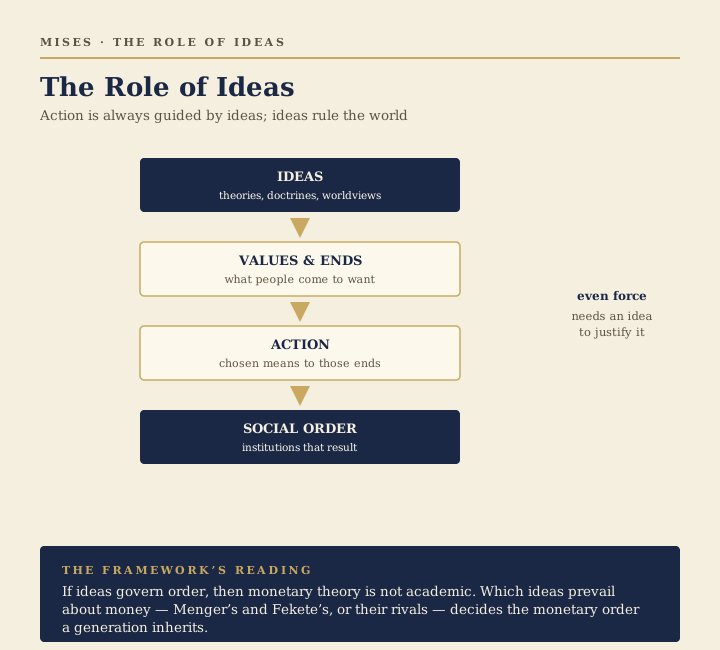
Because all action is guided by some notion of cause and effect and by some scale of values, ideas are the ultimate motive force of history. Institutions, governments, and social arrangements rest not on brute power but on the ideas people hold about them. Even a tyranny must persuade enough people that its rule is legitimate or necessary; naked force without an animating doctrine cannot endure. Public opinion — the prevailing body of ideas — is therefore sovereign in the last analysis, and social change comes from changes in what people believe.
Mises stresses that this is not idealism in the philosophical sense: ideas about the material world (technology, economics) matter as much as ethical or religious ones. But the causal arrow runs through the mind. Nothing shapes society that has not first shaped the ideas of acting individuals.
The lineage
Mises' own emphasis, though continuous with the classical-liberal conviction that persuasion, not coercion, is the engine of durable reform.
The Framework's Reading
This chapter is why the New Austrian project exists at all. If ideas govern the social order, then getting the monetary ideas right is not a scholarly hobby — it is upstream of everything. Whether Menger's saleability and Fekete's clearing become part of the public's working picture of money, or remain buried, will help decide the monetary regime the next generation is born into. The Framework's essays are an attempt to act on Chapter IX.
Cross-references
- Forward to: the whole diagnostic project — ideas about money made legible before the window closes