Part Four: Catallactics
Chapter XXI — Work and Wages
Ludwig von Mises · Human Action (1949) · A New Austrian Reading
"Labor is the most scarce of all primary means of production." — Ludwig von Mises, Human Action, Ch. XXI (paraphrased for length)
Chapter XXI — Work and Wages
What Mises argues
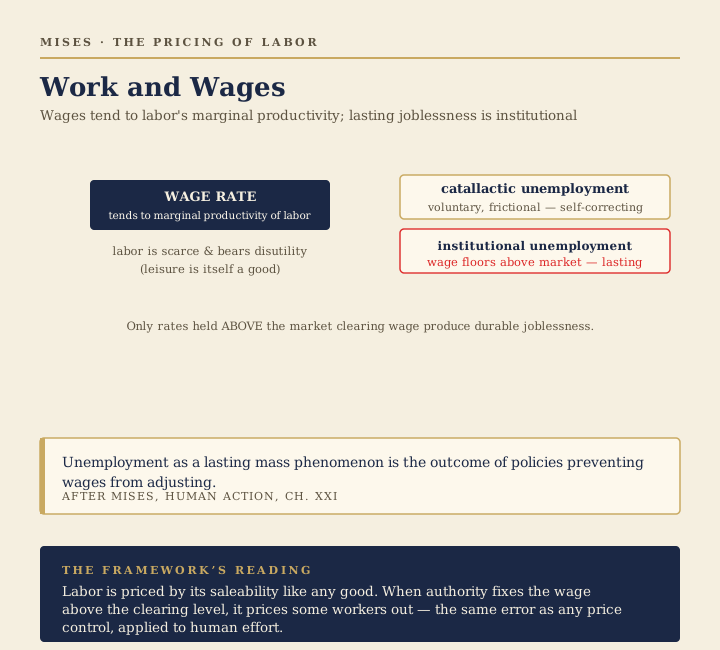
Labor is a scarce factor that bears disutility — leisure is itself a valued good, so labor is supplied only for a compensating return. On the market, the wage rate tends toward the marginal productivity of labor: employers bid for workers up to the value each adds to the product, and competition drives wages toward that value. Wages, like all prices, are discovered, not imposed.
From this Mises distinguishes two kinds of unemployment. Catallactic (market) unemployment is voluntary and frictional — a worker holding out for a better offer, or between jobs — and it is self-correcting. Institutional unemployment is different: when wage rates are held above the market-clearing level (by law, union coercion, or policy), the quantity of labor demanded falls short of the quantity supplied, and the gap becomes durable. Lasting mass unemployment is therefore not a failure of the market but a consequence of interfering with its wage signals.
The lineage
Marginal-productivity pricing applied to labor — Menger's subjective value working through the derived demand for a factor.
The Framework's Reading
The Framework affirms the chapter and reads it through saleability: labor is priced by how readily it can be sold, exactly like any other good, and a wage floor above the clearing level simply renders the least-saleable labor unsellable. This connects to the diagnostic series' theme of labor saleability inversion — the modern pattern in which credentialing, licensing, and mandated floors progressively strip marginal workers of the ability to sell their effort at any legal price. Chapter XXI is the classical statement; the Framework tracks its contemporary mutations.
Cross-references
- Atlas: The Price Signal
- Forward to: Chapter XXX — Interference with the Structure of Prices