Part Six: The Hampered Market Economy
Chapter XXIX — Restriction of Production
Ludwig von Mises · Human Action (1949) · A New Austrian Reading
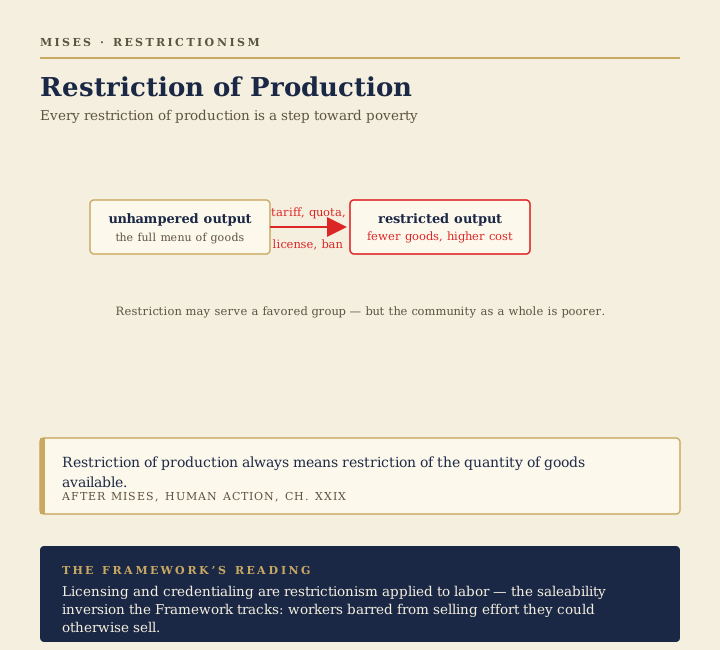
"Production restriction curtails the quantity of goods available for consumption." — Ludwig von Mises, Human Action, Ch. XXIX (paraphrased for length)
Chapter XXIX — Restriction of Production
What Mises argues
The simplest class of intervention is restriction: measures that prevent, limit, or burden production — tariffs, import quotas, licensing requirements, sumptuary laws, mandated idleness. Mises' verdict is categorical: every such measure reduces the total quantity of goods available and therefore makes the community, taken as a whole, poorer. There may be beneficiaries — the protected industry, the licensed guild — but their gain is a transfer, purchased at a larger loss spread across everyone else. Restriction never creates; it only redistributes a diminished pie.
Mises is careful to separate the economic analysis from the political question. A society may decide that some non-economic goal (national defense, say) is worth the cost of a particular restriction. Economics cannot forbid that choice; it can only insist on naming the price truthfully: restriction means fewer goods.
The lineage
Mises' application of the intervention theory to the productive side, extending the classical free-trade argument.
The Framework's Reading
The Framework affirms this and points its edge at the labor market. Occupational licensing and credentialing are restrictionism applied to human effort — legal barriers that prevent people from selling labor they are willing and able to sell. This is the mechanism behind the labor saleability inversion the diagnostic series tracks: a growing share of workers rendered unsellable not by market forces but by mandated entry barriers. Chapter XXIX names the general law; the Framework follows it into the credentialing economy.
Cross-references
- Back to: Chapter XXI — Work and Wages