Part Six: The Hampered Market Economy
Chapter XXX — Interference with the Structure of Prices
Ludwig von Mises · Human Action (1949) · A New Austrian Reading
"The government's price ceiling makes the situation worse, not better." — Ludwig von Mises, Human Action, Ch. XXX (paraphrased for length)
Chapter XXX — Interference with the Structure of Prices
What Mises argues
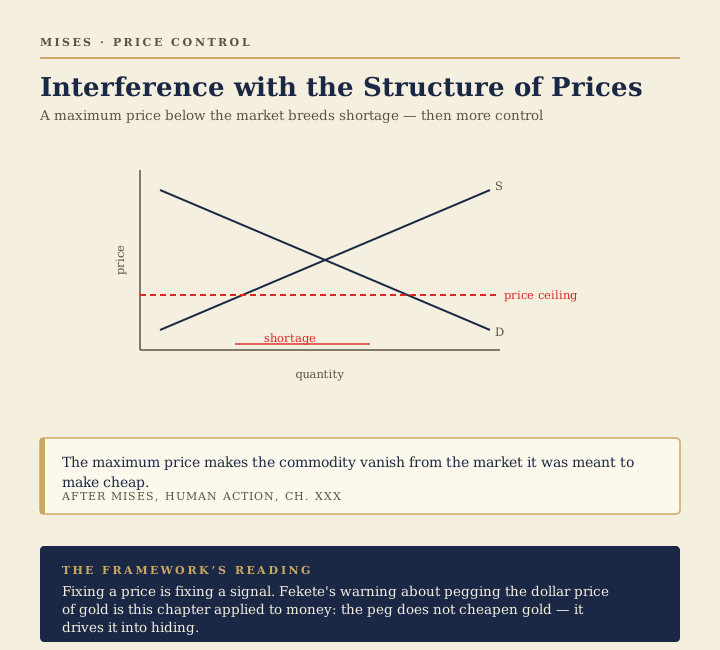
Here Mises analyzes direct price control, the most seductive intervention because its aim seems so benign. A government decrees a maximum price below the market level to make a good cheaper. The result is the opposite: at the lower price, the quantity demanded rises and the quantity supplied falls, producing a shortage. The good does not become more available; it disappears from legal markets, migrating to queues, rationing, and black markets. A minimum price above the market level (a wage floor, a price support) produces the mirror image: unsold surplus.
The deeper point is dynamic. Faced with the shortage its own control created, the government does not usually repeal the control; it extends it — controlling the inputs, then the inputs to the inputs, then wages, then allocation — each step a response to the failure of the last. This is the interventionist spiral: isolated price control, followed to its logic, tends toward comprehensive planning and the calculation problem of Chapter XXVI.
The lineage
Mises' own analysis, the classic Austrian treatment of price control, echoed in his account of the Roman and wartime price regimes.
The Framework's Reading
The Framework affirms this and applies it where Mises' followers sometimes forget to: money itself. Pegging the dollar price of gold is a price control, and it behaves exactly as Chapter XXX predicts — an official price below the market's valuation drives the metal into hoards and out of monetary use (Gresham's law is this chapter in monetary dress). Fekete's blunt injunction, do not fix the dollar price of gold — let it float free of dollar debt, is Chapter XXX carried to its monetary conclusion. The peg does not make gold cheap; it makes gold vanish.
Cross-references
- Atlas: The Price Signal
- Forward to: Chapter XXXI — Currency and Credit Manipulation