Part Six: The Hampered Market Economy
Chapter XXXIV — The Economics of War
Ludwig von Mises · Human Action (1949) · A New Austrian Reading
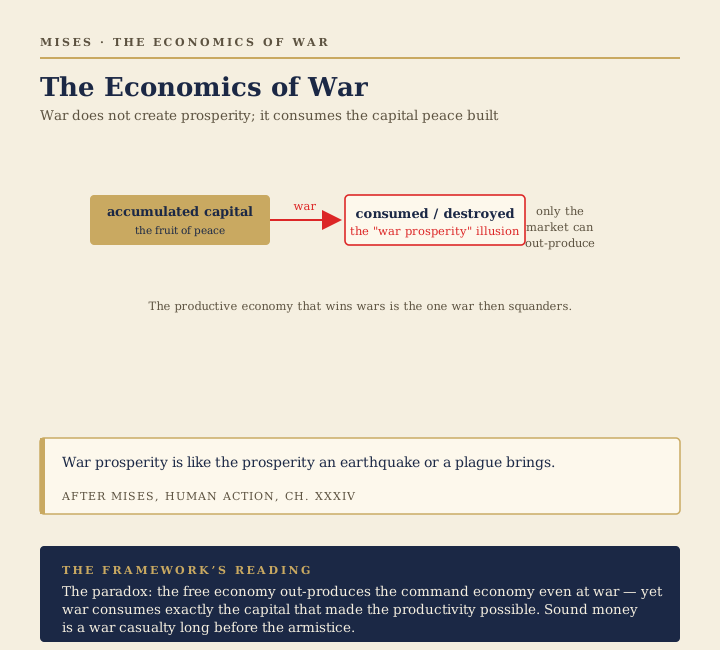
"War prosperity is like the prosperity an earthquake brings." — Ludwig von Mises, Human Action, Ch. XXXIV (paraphrased for length)
Chapter XXXIV — The Economics of War
What Mises argues
Mises dismantles the notion of war prosperity. War destroys goods and consumes capital; the apparent boom in war industries is a diversion of resources toward destruction and away from want-satisfaction, not a net creation of wealth. The busy factories and full employment of wartime are the economics of the broken window writ enormous.
He also states a hard strategic truth: the market economy out-produces the command economy, even in total war. A belligerent that cripples its own productive capacity with socialism handicaps its war effort; the capitalist nations won the great wars because free economies generate the surplus that arms require. But this cuts both ways — the very capital that makes a nation capable of waging war is the capital that war then devours. Total war tends toward total government (war socialism), and the longer it lasts the more it consumes the substance that sustained it.
The lineage
Mises' own analysis, informed by his experience of both World Wars and their inflations.
The Framework's Reading
The Framework affirms the chapter and adds a monetary footnote it makes vivid. Sound money is almost always an early casualty of war: the state, unwilling to finance total war by visible taxation, reaches for the printing press, and the gold standard is "suspended for the duration" — suspensions that have a way of becoming permanent. Much of the twentieth-century destruction of hard money happened not through argument but through wartime emergency. War consumes physical capital on the battlefield and monetary capital in the treasury at the same time.