Part Six: The Hampered Market Economy
Chapter XXXV — The Welfare Principle Versus the Market Principle
Ludwig von Mises · Human Action (1949) · A New Austrian Reading
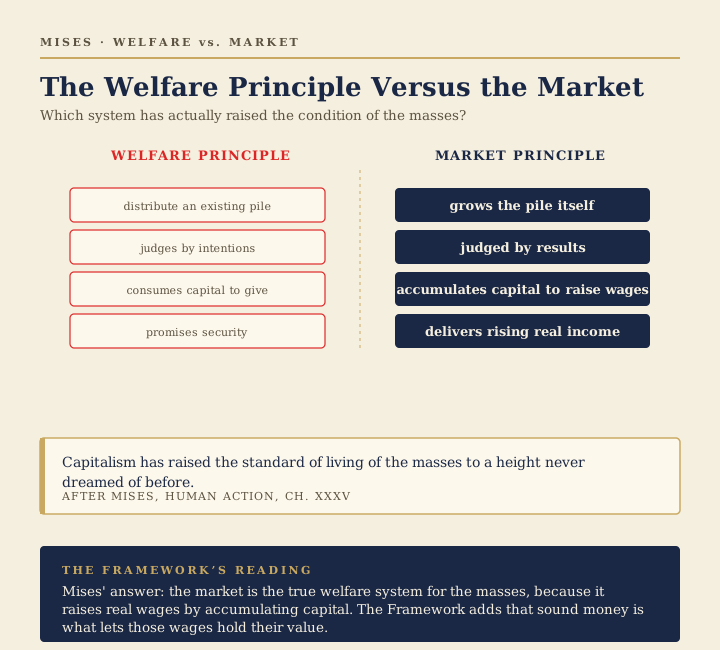
"Capitalism has raised the standard of living of the masses to a height never dreamed of before." — Ludwig von Mises, Human Action, Ch. XXXV (paraphrased for length)
Chapter XXXV — The Welfare Principle Versus the Market Principle
What Mises argues
Mises confronts the moral case for the welfare state — the claim that the market must be corrected in the name of the common man — and answers it with the record. The market principle has done more to raise the condition of the masses than any program of deliberate welfare, precisely because it accumulates capital, and capital per worker is what raises real wages and cheapens the goods ordinary people consume. The welfare principle, by contrast, tends to distribute and consume an existing stock while impairing its renewal; judged by results rather than intentions, it undermines the mechanism that generated the surplus it means to share.
Mises does not deny genuine hardship or the reality of poverty; he argues that the way to abolish mass poverty is more capital and higher productivity, which the market supplies and interventionism erodes. The welfare state, pursued to its logic, arrives at the same capital-consuming dead end as the other interventions of Part Six.
The lineage
Mises' economic reply to the ethical socialism of his century.
The Framework's Reading
The Framework affirms the chapter and completes it with the monetary condition. Rising real wages depend not only on accumulating capital but on a unit of account that holds its value, so that the worker's savings and pay are not quietly confiscated by depreciation. The market raises the masses; sound money is what lets the gains stay in their hands. Debase the money and you reproduce the welfare principle's failure by stealth — nominal gains, real erosion — no matter how free the rest of the economy remains.
Cross-references
- Back to: Chapter XV — The Market
- Forward to: Chapter XXXVI — The Crisis of Interventionism